Tuesday, December 16, 2008

Reunion- Barbara and Mari- after 50 years!


Mari (left) with Barbara

Barbara O'Connell ( nee Paines) and Mari Friend ( nee Jenkins) met up in Swansea for the first time since they left Craig-y-nos as children over fifty years ago.

Says Barbara:"I knew Mari straightaway. She hasn't changed a bit."

Tuesday, December 09, 2008

Re-union - after 50 years!


Mari (left) with Florence


Barbara (centre) with Jean Shakeshaft (right) and Jean Griffiths ( left )


Barbara Paines ( nee O'Connell) and Mari Friend ( nee Jenkins) met up recently for the first time since they left Craig-y-nos over 50 years ago.


Barbara says:"I recognized Mari straightaway. She hasn't changed a bit!"

Now that's a compliment if ever there was one.

Friday, December 05, 2008

A child's letters from Craig-y-nos

Sue Baker from Bath has sent me copies of some letters she wrote to her parents while in Craig-y-nos.

She says she will be 60 on December 27th and she plans to go back to Craig-y-nos for the first time later this month with her family for a meal there.

We wish her luck.


Dulcie Oltersdorf 1948-1949


Some more photos from the collection of Dulcie Oltersdorf who was in Craig-y-nos during the late 1940s.

Unfortuantely we do not have any names.

Thursday, December 04, 2008

Book- "Children of Craig-y-nos"

Dr Reeves is working ont the final stages of this book and she will be in discussion with the designer next week.

Thursday, November 27, 2008

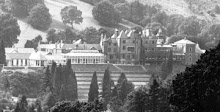
Boxes within boxes- Craig-y-nos


view of the balconies- Craig-y-nos Castle


Dr Carole Reeves


The Casco girls, Utrecht Project organizers. Mieke Van de Voort is second right. Binna Choi (far right) is the Director of Casco


street scene, Utrecht

The Children of Craig-y-nos in Utrecht

Last Thursday, 20 November, I was invited to Utrecht to participate in a project by Dutch artist, Mieke Van de Voort, developed in collaboration with Casco (Office for Art, Design and Theory). The project consisted of a three-day workshop leading up to a ‘game’ in which participants were set on an imaginary island called Orania, which had been stricken with an unidentifiable but deadly epidemic. No one could escape. The participants assumed character roles on the island – there were policemen, doctors, a mayor, as well as ordinary islanders – and had to cope collectively with the state of emergency. Over the three days leading up to the game, participants were given various tools, in the way of knowledge about the history of viruses and pandemics, theories of control and social order, self-organization strategies, notions of community, decision-making and conflict resolution. They then had to use this knowledge to deal with the pandemic and issues arising out of it.

I used the Craig-y-nos example to deal with ideas of quarantine, contamination and isolation. I spoke about how there were different layers of isolation – the location, the castle itself, the wards, the babies from the children, the children from the adults, boys from girls, ward from balcony, patients from families, children from animals, etc. Boxes within boxes was how I described it.

I gave lots of examples of individual experiences based on many of the collected memories, and included a great number of our wonderful images. I had a brilliant and responsive audience of people from all around the world including the Netherlands, Britain, South Africa and South Korea. Everyone was extremely hospitable and I greatly enjoyed my two days in Utrecht. (Dr Carole Reeves)

Tuesday, November 25, 2008

Boys on balcony - 1950s


boys on the balcony

This photo, taken around 1950 of boys on the balcony, comes from the collection of Mari Friend's (nee Jenkins) sister, Llywella. No names are known except that of Sister Rich.
Let me know if you recognize anyone: annshaw@mac.com

Friday, November 21, 2008

TB killed one person every 2 hours in Scotland - 1948

This alarming statistic - one death from TB every two hours in Scotland- comes from the following web-site -60yearsofnhsscotland.co.uk


which a former colleague of mine on the Glasgow Herald, Chris Holme's, was responsible for setting up.

Chris has written extensively on Dr Crofton, the Edinburgh doctor who pioneered the drug regime that was to successfully treat TB.

PS
Sorry folks this link doesn't seem to be working- just "google": nhs scotland 60 years tb

Tuesday, November 18, 2008

Glynne Lowe - and the ventriloquist


the Patti theatre

Six-year-old Glynne Lowe, one of the sick children confined within Craig-y-nos Castle in 1926 clutched his chair with excitement. There on stage of the Adelina Patti theatre, modelled after the Milan opera house, was a special kind of magician - a man by the name of Harry Elston.

He could throw his voice. He could become different people. Magic. Glynne had never seen a ventriloquist before.


And that concert remained etched in his mind, one of the big memories from his time in this isolated institution on the edge of the Brecon Beacons.

By a strange quirk of fate when Glynne grew up he got a job working for Harry Elston, a businessman and part-time entertainer, in Brecon selling tractors and agricultural machinery, a job he held for fifty years.

Yet Glynne never mentioned to Harry that day in Craig-y-nos when his act so enchanted him.

Why not?
“You never talked about TB …" says Glynne now in his 89th year.

Monday, November 17, 2008

Edward Telesford - put on a train, age 7, with label around his neck

Just received an email from Edward Telesford:

"Having recently come across the Children of Craig-y-nos Castle website, I'm delighted to see so many anecdotes from former staff and patients.

I don't remember where I was when President Kennedy was assassinated, but I do remember where I was the day World War 2 was declared. I was a patient in Craig-y-nos Castle and I was in the playground when nurses broke the news.

Like many before and after me, I spent time out on the long verandah overlooking a valley with a stream running through it. Occasionally, we'd be taken for walks, crocodile-fashion, and even to this day the smell of bluebells takes me back to those days.

I was later transferred to Highland Moors Convalescent Home where I spent a year or so before being put on a train and sent home alone at the age of seven, with a luggage label round my neck! I arrived safely."

Friday, November 14, 2008

The smell of Craig-y-nos


Ann at home on Ty-Llangenny farm before going into Craig-y-nos


Now the book is almost complete I realise nobody has commented on the smell of Craig-y-nos.

Indeed, even in my own account I make no mention of it though I remember it vividly when father carried me inside Craig-y-nos Castle, a vast ice-cold cave, and I am engulfed by the stench of pine disinfectant.

Thursday, November 13, 2008

Dr Carole Reeves, Craig-y-nos and Utrecht


Dr Carole Reeves

Dr Reeves has been invited to speak at an international conference in Utrecht next week on "The Children of Craig-y-nos":

"I'm flying to Utrecht next Thursday morning, presenting in the evening, and
returning next day. It's part of a three-day workshop which will include
performance, art, medicine, photography, etc. So 'The Children of
Craig-y-nos' will fit in well with the theme of the dynamic of infectious
disease and its social, political, individual impact."

She adds:
"This is yet another example of the impact of our project on groups worldwide."

Whoever would have thought that our stories about growing up as sick children in Craig-y-nos Castle would have aroused so much interest?

The book, by the way, is almost complete.

Monday, November 10, 2008

Adelina Patti and Craig-y-nos- some little known facts


Patti with her god-daughter on the lake at Craig-y-nos.

Here's some facts I have just discovered:

Did you know that Patti's father and godfather were both professors of music in Madrid? and that her family came originally from Sicily in the south of Italy?


Patti bought Craig-y-nos when she was in her mid or maybe even late 40's. After parties the local lads were invited to come to the castle kitchens with jugs to collect food left over.

Later the castle became a sanatorium and Patti's boudoir was used as a private room for TB patients. This became the Six-Bedder.

During the first year it opened as a sanatorium there were only two members of staff- the matron and Sister Phillips, assisted by
one maid.
Mr Christie was appointed as the first hospital porter and he lived in rooms above the former stables.

( Sources: biography of Patti and a taped interview with Sister Phillips done by her son)

Tuesday, November 04, 2008

Glyne Lowe - 1920s in Craig-y-nos


Christmas 1928 - Thomas Edward Isaac, centre, blowing a trumpet. Although this photo was taken two years before Glynne was in it gives some flavour of the place.
Is this the Patti theatre or the Glass Conservatory? Both boys have different memories. Can anyone confirm? Glynne thinks it is the Glass Conservatory.


(Both Valerie Brent, a nurse in the 1940s in Craig-y-nos and Glynne Lowe are adamant the above photo is taken in the Glass Conservatory not the Patti theatre- Ann)

I have just spoken to Glynne Lowe, now 88 years of age, who was in Craig-y-nos as a six year old. He used to sell tractors for a living and tells me he often visited my home, Ty-Llangenny Farm, where Dai Price an agricultural contractor, used to keep his equipment. He knows several of my cousins around Brecon too. 'Tis a small world...


Here's his story:

"I made the long journey from Bronllys via Brecon to Craig-y-nos as a six-year-old in 1927. At Pen-y-cae station an ambulance was waiting to take me to the hospital. I have no memory of treatment, apart from lying in bed, though I do remember having red sores on my legs and I still have the marks today. I don’t think my mother came to visit me but cousins from Aberdare did. I have no memories of the food although I recall eating at a table at one end of the ward.

They kept sweets there, and we were given sweets after dinner. I don’t remember being cold - you don’t feel the cold when you’re a kid.

Christmas was a highlight. I remember being entertained in the Adelina Patti theatre by Harold Elston, who was a ventriloquist, and Mr Whitney, a butcher who did conjuring tricks. At the end of the performance there was a big box of sweets thrown to the children. We may have had lessons but not many. I remained at Craig-y-nos for seven months. I didn't like it much. It was a miserable damn place. I was transferred to Talgarth ( … sanatorium) for a further five months where I enjoyed the camaraderie - they were quite a bunch of boys. I sometimes wonder if I really did have TB. I’ve had pernicious anaemia for forty or fifty years and I think my illness might have been a sign of that.

I started work at fourteen as a motor mechanic but after an accident, which smashed my toes, I sold tractors.
In the course of my work I would pass Craig-y-nos and would go into the forecourt to look at the goldfish in the pond.

Wednesday, October 29, 2008

Texas and T.B.

Patti from Texas tells me that she finds the story of "The Children of Craig-y-nos"

" touching and even a bit intriguing because none of us have had to witness a victim of TB in our life times. We take the funny little test at the doctor's office, get an injection and that's all we really know of it."

I am amazed.
Most people I know in Wales will have known at first hand of a friend, relative or have suffered from TB themselves.

Thursday, October 23, 2008

Craig-y-nos and Texas


“The Children of Craig-y-nos” story– of sick children locked up in a remote haunted castle for years- has touched people around the world.

Take this email I got yesterday from Texas:

I am almost ashamed to tell you that I first heard of Craig-y-nos through a book I happened to buy last weekend entitled "Ghosts of the World". I bought it on a lark, as I had been sick and unable to participate in our usual "Haunted House" outings we take during the Halloween season.

Anyway, I happened upon a story about Adelina Patti and her castle. Although it was very brief and vague, it mentioned the ghostly sounds of children giggling and playing in various parts of the castles...remnants of an era when the castle was a hospital for TB patients. Captivated by such an intriguing collection of stories for one castle, I decided to research the castle online. What I found was so much more than I would have ever expected! All the stories and photos of the people, mostly the children, who were treated in this “hospital”, captivated my heart.


More than anything else, I wanted you to know that your story has touched me so that I plan to share this with my friends. It is not a whimsical look at "sick kids in a castle" or even for the rush of telling ghost stories. My parents gave me the special ability to give appreciation to human life and the stories we can gain so much from.

I am so glad I found this story. Thank you for all your hard work to share this almost lost moment in time...and THANK YOU for sharing it in a way that it even reached someone like me...all the way in Houston, Texas, USA.

Most respectfully,

Patti Abbott-French

Tuesday, October 21, 2008

Who are they? - circa 1950


Can anyone remember the names of these young women? again the possible date is around 1949-52.

Friday, October 17, 2008

Craig-y-nos and Iceland

I guess there can't be many folk around who have lived in Craig-y-nos Castle and Iceland.
But I am one of them. I was four years in Craig-y-nos and one year working in Iceland.
So what's the link between the two? a love of a cold climate.

So, with Iceland in the news every day and images of Reykjavik flashing up on the telly screens most night I am agog.
It is my old stamping ground many years ago and I am eager to see how it has changed.

Sunday, October 12, 2008

Carol Hughes( Davies ) - 1950s

Carol Hughes (Davies) from Skewen writes on the BBC Mid-Wales web-site:

The nursing staff at craig y nos treated us the best they could but the place was not the best to treat children in the rules were hard to keep i remember the best ones auntie maggie, sister morgan, nurse glenys davies. I was often tied to my bed i can remember once i was on bed rest i called a nurse who was in the ward to say i wanted to go to the toilet she ignored me so i got out of bed ran to the toilet for this the nurse caught me and gave me a good shaking and i had restrainers put on to stop me getting out of bed. I was 6 years old at the time i was also in sully hospital that was like a luxury hotel compared to craig y nos but credit must be given to the young nurses, many people would not come near us. TB was something to fear then i went to the exhibition in swansea museum and i found people wanting to know more because there are no records and they even gave me a hug which is a far cry from the 1950s.

Tuesday, October 07, 2008

Night-time in Craig-y-nos

The memory of being woken in the early hours of the morning by night sister’s torch flashing in my face, when I was still coughing up blood, came back to me with a jolt as I read through children's accounts of those days.


Many have spoken about waking up in the morning to find the bed next to them empty.

John, then aged 9, recalls:
“Sometimes the person you had been talking to one day was not there the next day just an empty unmade bed! This happened too many times. It was a scary lesson to learn for someone of a tender age.”

Or June, age 4, who woke morning and put her hand out to touch the girl in the next bed on the veranda to find she was not there and Sister Morgan telling her that she had “gone home in the night because she was missing her mother.


Going to sleep was associated with dying in many young minds.
Rosie, age 6 at the time, says:

"I was aware of people dying there. That's why even to this day I don't sleep very well because I was afraid to go to sleep because the nurses used to say oh she died in her sleep. I used to think well I don't want to die and I was afraid to sleep.I was terrified of going to sleep because that is when people died”.


Myfwany, a teenager, added :

“My father's brother died in Craig-y-nos as the clock struck midnight.

Well, when it was my turn to go in this thought was in my mind and every night it was me fighting to stay awake until that clock had struck midnight. And then I could sleep.”