Tuesday, July 24, 2007

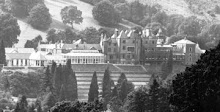
Pat Mathoulin goes to Craig-y-nos in 1945


Pat Mathoulin, age 9 years

My Auntie’s house

Pat has just sent me a written account of her arrival at Craig-y-nos as a 5 year old. She has already given a full oral history interview to Dr Carole Reeves.

This is an extract:
“No sooner had I finished my breakfast when my mother announced, in a matter-of-fact tone, that I was going to spend a few days with my Auntie Renee, who I had only seen on the one occasion when she had come to visit us.

I can’t remember feeling all that excited at the prospect for not only had I sensed that my mother hadn’t appeared all that wholehearted about my impending holiday but she had also been very quiet all morning.

I also thought it rather strange that my sister wasn’t going with me. Instead she had gone off to school quite happily. it did seem odd and yet I didn’t question it.

After what had seemed a rather lengthy bus journey, and still unable to summon up any sort of enthusiasm about my visit, we finally arrived at my auntie’s house which was surrounded by a very high wall that had prevented me from being able to see the front of the house.


A large wooden door had been incorporated into this wall with an attendance bell to the side of it.

As soon as the bell had been rung then an elderly gentleman immediately opened the door and showed us through in to a large impressive looking courtyard that had a beautiful working fountain in the centre.


At last I was now able to view my Auntie’s amazing house which was, to say the least, awesome, foreboding, having been constructed of dark grey stone.


It looked unreal somehow, certainly uninviting, and altogether horribly scary.
My very first impression of it had absolutely terrified me and I knew immediately that I wasn't going to enjoy my few days there.

£50 donation

Yet another donation to “The Children of Craig-y-nos” memorial fund has come in this time from Dr Carole Reeves, the Outreach Historian helping me with this project. Carole is half Welsh .

She says:"My mother came from Ferndale in the Rhondda valley,
and I know that she would have wanted me to do this project."

Like most people with family connections in the Welsh mining valleys she too knew what it was like to have TB in the family.

Monday, July 23, 2007

Mary Williams-1951-first to get streptomycin in Ward 2

Does anyone remember Mary Williams, the farmers daughter from Talgarth?

She was the first person to receive streptomycin in Ward 2, and she made a recovery within weeks.

Nurse Glenys Davies remembers her arriving , it was either late 1950 or early 1951, she is not sure, and she says Mary was dying so they put her into sisters office so that they could nurse her.
They didn't expect her to live.

Within weeks of receiving injections she started to get better.
Glenys describes it as :"miraculous!"

Mary's parents delivered milk to the schools around Talgarth and after Mary was admitted to Craig-y-nos all the children had to be tested.

I am going to put a note about this in the Brecon and Radnor Express in the hope that we can find Mary and invite her to the Patients Reunion on Sunday September 9th in Craig-y-nos Castle.

Sunday, July 22, 2007

Haydn Beynon - 1931


Haydn was in Craig-y-nos for one year as a seven year old in 1931.

He was then transferred to Highland Moors hospital. He says there has been no mention of Highland Moors on the blog so far.
This is correct. Haydn is the first person to come forward who was transferred there from Craig-y-nos.

He recently re-visited the Castle, and an interview with him will appear shortly.

Saturday, July 21, 2007

The ponies - 1956


Edgar, the Head Gardener, with Tosca and Lady


Pam riding Lady


Christine Bennett and Beryl Rowlands with Lady. What are they trying to do with the pony?


These photographs of teenage girls enjoying (illicit) time riding Dr Williams daughters ponies shows just how the sanatorium regime had slackened off by 1956.

Mary, one of Dr Williams' daughters has already contacted us saying she was surprised to learn that her ponies were being ridden while she and her sister were away in boarding school.

( If Mary is reading this I wonder if you would be good enough to email me again- several attempts to contact you have resulted in "bounced" emails. Thanks! Dr Reeves would like to interview you).

Friday, July 20, 2007

The dentist

Pat's story reminds me of my visits to the Craig-y-nos dentist and the bucket of drawn teeth he kept beside the dental chair.
Anybody else remember it?

Pat Hybert (née Mogridge), age 19, 1952 -1953


Mari and Pat on the stag


"I went into Craig-y-nos in December. It was snowing, and very, very cold, and I was disappointed going in then but there you are, we were all in the same boat up there .

We missed a lot of teenage years, didn’t we in those days?
But still, I was very lucky anyway. I’d had treatment before I went in … streptomycin … so it was only a case of bedrest. When I hear them complaining about hospitals these days, they were quite dragons, the sisters there then,
especially one of them.
I always remember, we had a relief sister on at one time and I was, at the time, able to get up, and she said, ‘Well, you can dress.’ And, of course, the other sister had always said we couldn’t dress. And when she found out that I had been dressed this day, she wasn’t very pleased about it.
We were like a lot of children in school really.
There was one particular woman, Sister Williams, and we had a very nice nurse there, a nurse Davies.


Pat in the "Six-Bedder"

I’m seventy-five this year and we did wonder whether we’d all reach that age at that time. I thought, well, when you went in you really thought it might have been the end of you after a bit because, I mean, people were still dying of it when we were in there then.
And there were a lot of them in a bad way, but, as I say, we were very fortunate. There was a young lady in the next bed to me. Well, she did sign herself out. I can remember a Joyce Rees and I know she died so she couldn’t have been very old but she did have one child.

I was in the “Six-bedder,” (Adelina Patti’s former bedroom) and in the next ward was the children’s ward.

I can remember being in there when it snowed in the winter and they had ground sheets on the beds nearest the window. It would be freezing. And the children wonder why I can’t stand the heat now. It’s terrible being in a room with everything closed up.
Well, I think it toughened us up.

Did you have any brothers and sisters who had TB?
No, I found out afterwards that my father had had it, and he was in Talgarth, but he got over it and he was in his late seventies when he died.

But, on the whole, it wasn’t too bad I suppose (Craig-y-nos) when you look back. We had some fun there as well.
What sort of fun?

Well, we used to have a bit of entertainment with film shows. We’d have films in the cinema, in the Adelina Patti Theatre.


Harry Secombe

I can remember Harry Secombe coming there, that was on the Christmas, but I wasn’t allowed to go because I got out of bed and I shouldn’t have done. Now I wouldn’t have taken it, but I suppose at the time you just did as you were told.

Yes, we were very naive really compared with these days. We did miss a lot of things in life, I suppose, by being there. I mean, we couldn’t go dancing after you came out.
You had to be careful what you were doing. Well, I was very wary of what I was doing afterwards, I was having check-ups then still, for years.

And you’ve remained fit and well?
That’s right

I remember a lot of the children.There was one little girl in particular. She lived down in Gorseinon, not far from me. Norma, I think her name was. Norma Pearce, and I often wonder what happened to her because she must have only been nine, but the children used to write letters to us in the six-bedder ward. They sort of befriended us, sort of thing. Yes, everybody had a sort of pen pal.
We couldn’t go in and see, and I remember my husband (as he later became) used to creep round the door to go in and see her.
And I often think of that.

What about the food there?
Oh, don’t ask. It was diabolical. I can always remember. There’s only one or things I don’t like, and one of them is porridge. And I can always remember them coming round, the first day I was there with this porridge for breakfast. It looked disgusting, and she said, ‘Oh, you’ve got to eat it. You’ve got to eat the food.’
‘Well,’ I said, ‘If I never go out of here, I am not eating porridge.’ And I did stand by that. I thought I could never eat it, and I used to think then, I can always remember … and when I see people eating porridge, it always reminds me of that. Lumpy. And parsley sauce, the same. That used to come round.

No, the food wasn’t all that clever there. I remember they used to give us a lot of milk to drink, thinking that would do us good. Well, of course, we all put on a tremendous amount of weight, didn’t we? I was up to nine stone when I was in there. My normal weight was eight stone four. But it soon came off once you started walking about. But the food wasn’t very good. I can remember we always used to be glad when weekends came and the family came with something to eat. Something decent.
.
I had a friend living in Abercraf, as it happened, not far from Craig-y-nos, and her mother used to make the most delicious Welsh cakes. She always had a box of them, and I used to share these Welsh cakes. We were always so glad when my friend came up with a box of Welsh cakes. But, you know, things like that you appreciated. And when family came in, of course, you always had nice sandwiches of some sort. No, the food (in Craig-y-nos) was pretty grotty there but anyway, we all survived it.


Edgar, the gardener, rowing some of the girls on the lake

Visit to the dentist
I can remember going to the dentist because I had a bad tooth. When I came back up to the ward I thought, ‘Well, he hasn’t taken the tooth out that he should. He’s taken the next one out, twit.’
I couldn’t believe it. I said to one of the girls I could feel this tooth, and of course, my mouth had been dead, and I said, ‘Which tooth has gone?’ I thought he was taking the two front teeth out because one had gone anyway. He’d taken the one next to it so I had two gaps.
He took this other one out and of course I had to wear false teeth, I couldn’t eat anything when I had these two false teeth on a plate.
I came home and when my dentist saw them, he said, ‘Oh, I can’t believe this. I can’t believe what I’m seeing.’ He said, ‘I’ve never seen such awful teeth (the false ones). I remember trying to eat crisps or something once, and I thought, ‘Oh, my God, they’ve taken the wrong teeth out.’ When I got home, I had to have my teeth done.
Never mind, I survived. So, that was another episode up there.

When they said I was going for sputum tests, I was frightened to death. But they used to say, well they do this or they do that or you get the magic eye, you know, and I used to think, ‘Oh, please don’t let me have anything like that.’
What was a magic eye?
I don’t know whether that was to check your lungs or whatever. No idea.
(Could have been a bronchoscopy – Carole)


Dr Huppert

We had the Austrian doctor, Huppert or Hubbard or something. We used to call her Dracula. She used to come round with her load of blood tests. When we heard her coming, I used to think, ‘Oh dear, she’s coming for blood again.’ But, ah dear, dear.

How often did you have to have blood tests?
I don’t remember. I think we used to have them pretty regular. There was Dr Huppert and there was a Dr Williams. He was very nice, but she was a good doctor, I suppose.

The streptomycin affected my hearing. I’m completely deaf in one ear now, but I could feel my ears tingling and I remember, telling the doctor, and they had a look in my ears and things to see if they wanted syringing, but I don’t think they were very interested, really. All they were interested in was getting you cured.
But anyway, it was a small price to pay, I suppose, for being fit and well again, isn’t it?

Work
I had a job before I went in. I came back out in the June, and I think I was home for about six months. They told me my job was still open, luckily. I worked in an office and they let me go back part-time. They were very good.

How many children did you have?
Two. The girl is forty-seven now and the boy is forty-five.
And I’ve just had a new grandchild, a little boy, and I’ve got another two grandsons. One is fifteen and the other one’s five.

On the whole Craig-y-nos wasn’t too bad when you look back. "

Pat Hybert was interviewed by Dr Carole Reeves, Outreach Historian, the Wellcome Trust Centre for the History of Medicine, University College London.

Thursday, July 19, 2007

Money- Mrs Lewis, 2007

Receive a cheque for £20 this morning for “The Children of Craig-y-nos” from Mrs Lewis in Brynmawr.

She says:” A wonderful project and every success to you and the Sleeping Giant......good luck, take care also be lucky.”

Thank-you Mrs Lewis!
My first reaction is that the donation should go towards funding the first ever exhibition of photographs of The Children of Craig-y-nos” which takes place in the Ystradgylais Welfare Hall from Friday September 9th.

On second thought why not use it to launch a memorial fund for some kind of a plaque for the grounds.....

We made it, hundreds didn’t.

Pat Mathoulin, age 5, 1945

People are starting to contact me following the article in 0639, the local community magazine.

Pat Mathoulin rang me yesterday from Yorkshire. A relative had sent her a copy of the magazine.
She was in Craig-y-nos as a 5 year old in 1945.

She said she cried all day after reading about the project because it brought back so many painful memories, like the times nurses held her hands behind her back while another pushed a tube down her throat (yes the notorious gastric lavages), to remove gastric juices.

Pat had no idea what it was for. She thought it was some form of treatment. But this unpopular medical procedure was the only way to test if you were still positive.

The contents were fed to guinea pigs. If they lived you could go home.


When Pat did return home she was under strict orders from her mother never to say in school she had been in hospital.” So I said I had been on holiday and my father had been killed in the war.”

But her father, a miner, had died of TB meningitis three months before she was admitted to Craig-y-nos.

At 18 she left Wales to go to London, got married and worked as a shorthand typist. She has written a book about her life though there is no mention of Craig-y-nos “I didn’t want to offend people.”

Only now does she feel the time has come to speak the truth and lay these ghosts to rest.

Wednesday, July 18, 2007

Pen-friends - 1950


Jean Parker

Most of us were in Craig-y-nos for years, not months, so how did we pass the time?


There is no simple answer because it depended on the year ( before the introduction of drugs, or after), your age, how ill you were, the regime of your ward and whether you were inside or out on one of the balconies.

Marion

As a 10 year old inside Ward 2 confined to strict bed rest with my bed tipped up on 12 inch blocks and forced to lie on one side, with a pillow wedged down my back incase I should accidentally turn over, I was only allowed to read and write.


Unknown, London

I could feed myself but not wash myself.
So what did I do? Well, I had pen friends. These are some of their photos from my album.

June, from Dundee
Years later as a teenager on the balcony I had a very different experience.

Tuesday, July 17, 2007

The asthmatic attack- 1952

( Notes from my Craig-y-nos Diary)

A new girl called Gwyneth has just been put on the balcony. She's a distant relative of mine, so they tell me, and she comes from a farm too. She's older than us, 14 going on 15, and she's very clever.

She wants to be a doctor when she grows up. Nobody laughs at her when she says this. She is respected by everyone.

But Gwyneth has got asthma and Dr Huppert came up with the idea that putting her out on the balcony in midwinter would help her asthmatic attacks.

Gwyneth has been given a hand bell to ring if she feels an attack coming on. Well, we are going through a bad spell with dense fogs and lots of damp air around after all it is mid-January and the first night out on the balcony brings on an asthmatic attack.

It's frightening to watch. We've never seen one before and we are scared. Gwyneth rings her bell as instructed. Nothing happens. So we take it and ring it.
Still nothing happens.

“Look we have got to do something,” says Rosemary, my best friend.

We watch, petrified.
“Lets find night sister.”

Our shouts eventually produce night sister.
“What is it ? what is all the fuss about?”
She follows us out on to the balcony.

Gwyneth is fighting for her life.

“Oh my goodness!” Sister is shocked too and she rushes back to the office and returns with a gadget called an inhaler.

This helps Gwyneth.

“Where is Louise?” ( the night orderly) demands Night Sister.
We shake our heads.

Eventually Louise appears, smelling strongly of smoke, and squinting the way the way you do when suddenly confronted by bright lights for by now the whole ward is awake with the commotion on the balcony.

“Perhaps Gwyneth will be moved back indoors,” says Rosemary.

We stand by ready to help move her bed for the fog is swirling around the balcony.
But no, Night Sister leaves her there.

Next day Dr Huppert says Gwyneth must stay on the balcony.

It's three more days before she admits her experiment has failed and allows Sister Morgan to wheel Gwyneth back indoors.
By this time she has suffered several more attacks.

Monday, July 16, 2007

"Fresh air" treatment- 1951


(from left to right) Ann, unknown, Joan Powell

This is the famous "fresh air" treatment in action. I am on blocks (left) and Joan Powell (right) is a plaster bed patient. Don`t know the name of the girl in the middle.

Berlin -2007

If the posts for the past few days have been a bit erratic it is because I am in Berlin and I have accidentally deleted the photos for today´s blog which I had carefully uploaded to the internet into a draft folder before leaving Scotland.

Curses!.....

Just for good measure this computer is all in German and I don´t speak German.

Sunday, July 15, 2007

Two members of staff - 1956


On the balcony of Ward 2: Nurse Davies and Sister Marsh- from the collection of Christine Perry ( nee Bennett)

The Adelina Patti hospital -two views


Here are two very different views of Craig-y-nos Castle while it was a TB sanatorium. The first is greeting card of a romantic painting showing the hospital by moonlight. The second is of the hospital as it was in 1956 with the balconies. (Part of Christine Perry's collection)

Christine Bennett 1956


Christine with a bunch of flowers - must have been visiting time!

Wednesday, July 11, 2007

June Davies (nee Bevan) age 3, 1945-47

Early days in Craig-y-nos
" I was there for two years, going on for two and a half.
and I remember all of it.

I remember going up to the top room, looking out of the window and waiting there for my mother to come because she was only allowed once a month to visit me.

And when she did come, I wouldn't speak to her because, you know, I was so … I can't explain to you. But my father, when he used to come, he used to cry all the time so they stopped my father from coming to see me.

Then, there was somebody else from Rhossili (Gower) in Craig-y-nos and my mum got friendly with that person's mother and they used to share a taxi up to see me because I used to live in Oxwich which is down on the Gower coast.

"Fresh air" treatment
And then I remember being out on the veranda with a tarpaulin on me and covering all over the bed, and it would be freezing cold … snowing, wind, rain, any damn thing … I was on the veranda. And I remember then, they used to take me … you were not allowed out of bed … so, of course, I was getting out of bed.

Death in the night
And then I remember when I was out on the veranda, the next patient to me was a shy little girl like me, and when I woke up in the morning, I put my hand to have a look for her and she wasn't there. So, I said to the nurse … I can see her now … Sister Morgan, she was. And I said to her, 'Where's so and so?' 'Oh,' she said, 'She's had to go home for a little while because she's missing her mother.' So, I said, 'Well, I'm missing my mammy, too.'

But she had died in the night. I was thinking then after, if she's gone home, why can't I go home?

When did you find out that she'd died?
Oh, not until … after a while. I'd been there a while, I was looking for her and everything. And they said she'd gone home and I don't think she will be coming back. But they never told me she'd died. They just said she'd gone home and didn't think she was going to come back.

Dr Huppert
I always remember the doctor … she was German … and I think her name was Huppert. She was a German doctor.

Oh, she used to have her hair cut like a man. I think she had a wooden leg, honest to God. She used to drag one leg and I can see her now with her white coat on, her stethoscope, and dragging this one leg. And she used to be ... gggrrrrrrr (glowering).


Food
I had no milk because they said that the TB bug was in milk. I can remember the lift coming up with the dishes on (from the kitchen) and the cutlery. And I used to go out with the knives and forks and give it to everybody. And I said then to my mother, 'I'm going to be a nurse one day.' And my mother said, 'Well, we'll see about that.' So when I came about sixteen years of age, I did a pre-nursing course in the Tech.


How did they found out you had TB ?
“My grandmother said to my mother, 'This child's not well.' So, my mother said, 'Which way?' She (my grandmother) said, 'They don't cough and cough and cough, like that.'
And my grandmother said, 'You take this child to a doctor.'


First of all, I went into Morriston Hospital, because I went home then to pack all my clothes and everything, then I had to go up to the laundry to be measured for a … I had a white gown, like a white night shirt, that could go to the laundry regularly (in Morriston). And if we were good girls we used to have an orange and an apple once a week (in Morriston).

In Craig-y-nos we never had anything like that. Only what your parents brought up to you.

Visiting
My mother would come in with all these toys and different things, and then I'd throw them all on the floor and say, 'I don't want them. No, I don't want them, take them home.'

Was your brother allowed to come and see you?
Yes, but he didn't come very much because he was working. He'd just started working on the Evening Post as an apprentice

So, being in Craig-y-nos didn't stop you becoming a nurse?
No, I passed my SRN, and then I was a senior staff nurse. I was in charge in one geriatric hospital.

Have you every spoken about your experiences of being in Craig-y-nos before?
No, not really.

They'd say, 'Have you had any illnesses?' And I'd say, 'Yes, I've had TB.' 'When?' 'Oh,' I'd say, 'I was just three.' I was born in '42, so it was about 1945.


How many children have you got now?
I've got one boy who's forty-two.

Has your TB ever come back?
No, but I got MS.


How long have you had MS?
Since I was about twenty years of age. I first started my signs and symptoms. I was dragging my left leg all the time. And my father used to say to me, 'For God's sake, pick that foot up.' I said, 'I am picking it up.'

So, you must have been working as a nurse then?
Yes.

Was it always cold in Craig-y-nos?
Yes, it was always cold, and I'm cold all the time now. I'm shivering and I'm cold, and my husband is sweating.

Was there any heating at all in Craig-y-nos?
There wasn't.

Did you have lots of blankets?
If you wanted them, you asked for them, but I was only little. It's only now, because I know so much, how I really survived.


Do you remember any treatment?
No, there was no treatment for TB . It was just fresh air, and fruit and things like that. No milky foods at all, no cheese, no butter, nothing like that because they thought that the TB bug was coming from butter and milk and things.


Was there any time in Craig-y-nos when you were allowed to get up and go outside?
No. I remember getting out of bed to do this and that.
And the next thing, they came round … it was Dr Huppert … she said, 'This child's hair is too long.' I had a mass of curls. And she said, 'It's got to be cut.' And they cut all my curls off.
Who did that?
The nurse. And do you know it never grew back curly at all. It's just dead straight.


Did they tell you why they cut your hair?
My mother went to ask, and this Dr Huppert said, 'Because all the strength's going in the hair and not in the body.'
My mother said, 'Oh.'


What was Sister Morgan like?
Very nice. I used to send her Christmas cards. She used to send me a Christmas card.

Do you think that you suffered trauma from being in Craig-y-nos?
It must have been, mustn't I? Because I can remember everything. I can remember going up and down in the lift and then having a row for going up and down in the lift. Oh, and I remember they put me in this strait jacket, in the bed and I couldn't move. And I can see it now in films and things, and I think, God, I used to have one of those.

Did they tie you to the bed?
Yes, in this strait jacket, and they used to tie me each side of the bed. I couldn't move, I couldn't get out, I couldn't move … nothing.

Were you ever bullied by the other children?
No, I think I bullied them myself. My name was Bevan and they used to say my nickname was 'Bully Bevan'.

Even at a very young age, you were a bully?
Yes.

So you've stuck up for yourself ever since?
Yes.

So you don't feel that you were too traumatised long-term by this or do you?

I don't know really. I think in the beginning, yes, because I couldn't understand why my mother only came once a month to see me. I used to sit there waiting, waiting, and if I've got to wait now, I say to myself, 'My God, I've done nothing but wait all my life.' Wait for this, wait for that.

Do you think your parents suffered from you being in Craig-y-nos?
My mother did, and my father. I'm sorry to say, do you think I can go off now because my husband has cooked my meal?

Dr.Carole Reeves, Outreach Historian, the Wellcome Trust Centre for the History of Medicine, University College London in telephone interview with June Davies ( nee Bevan).

Tuesday, July 10, 2007

Legs and injections: 1956 (?)


June and Ann Davies holding a poster of Tony Curtis- Ward 2 balcony


Ann Davies receiving a streptomycin injection from Staff Nurse Williams

This rare photographic record of a girl receiving the life-saving drug, streptomycin, in Craig-y-nos comes from the vast collection of photos which arrived on e-mail - over 70 - from Christine Perry ( nee Bennett).

It is one of the most comprehensive records so far of life in Craig-y-nos in the mid 1950's.

Thank-you Christine!

Monday, July 09, 2007

Pamela- balcony, 1955


Little is known about this photograph except that the girl is called Pamela.
Note that by 1955 the balcony had acquired windows! the result of parents complaining that they had to sit there with hot water bottles. Needless to say the windows are wide open.

Why is she holding on to a chair? maybe she is learning to walk again though by the time you were allowed clothes you should have been quite mobile.

Saturday, July 07, 2007

Dorothy Johnson 1949-52 (?)


Dorothy Johnson

Initiation rites Ward 2 - 1950

So Susan was in the next bed to Dorothy Johnson! ( see yesterday's post).
I am gobsmacked to read this.

I was next to Dorothy in 1950 before I got moved to the balcony in 1951.

Dorothy was my teacher/mentor/protector during that first year in Craig-y-nos. I was 9 and Dorothy must have been about 14, maybe even 15.

About TB
It was Dorothy who explained to me that I had TB and that everyone else in the ward had it too. They didn't seem bothered by it. There were 18 ( I think) in the ward all much older than me.


It was Dorothy who told me that I wouldn't be in Craig-y-nos for three days as my mother had promised me.

“More likely three years” she says.
She's close: it 's 4 years and 3 days.

Parents
It was Dorothy who told me that the reason my mother was fat was because she had a snake living inside her and the reason my father was so thin was that he had a snake inside him too. I believed her and each visiting would look carefully at my parents for any sign of these strange serpent like creatures living inside them.
How could this be? it didn't seem logical . Why should a snake make one person fat and another person thin? Dorothy was unable to answer this question. It puzzled me.


Inside Ward 2: Ann on 12 inch blocks with friends

Initiation rites Ward 2 - 1950
But back to the beginning. After a couple of days in Ward 2 the Ward Boss demands I sing.
I refuse. I don't know anything to sing. It was clear the other girls - this was an evening ritual after lights out- all know something called “pop songs”.

Having never left Ty-Llangenny farm, my remote home in the Black Mountains except twice to go on holiday first to Aberystwyth then to Llandrindod Wells I had no knowledge of the outside world. All I know are nursery rhymes and hymns.
Somehow I sense this is not appropriate.

“Go on sing!, sing, sing” they chant.
And still I remain silent.

The Ward Boss changes tactics.
“Who is your favourite film star?”

Now having failed miserably the first test how was I going to attempt to pass the next?
Other girls repeat the question.

I remember the silence, the waiting expectation. What could I do? the only film I had ever seen in my life was the occasion we all went to a special film show in Crickhowell and it was set in a castle where the hero used to frighten people into doing what he wanted by taking his head off ( somehow the alleged ghost of Adelina Patti wandering through the wards never seemed so scary after that screen image of the man taking his head off and putting it under his arm).
No, that wouldn't do. There must be something.

Mother used to like to listen to a woman singing on the radio. My brother and I always had to be quiet, real quiet as the whole family stood in silent homage around this big brown box once a week in the farm kitchen listening to a woman's voice emanating from it.

Was she a film star? I had no idea.
“Who is your favourite film star?” the Ward Boss repeats the question.

“Gracie Fields” I say my voice trembling, hoping that this woman whose singing enchanted my mother so much was indeed a film star.

Some girls laugh.
The Ward Boss is suspicious of my choice:”Don’t you like men?”
“Yes” say I wondering what this has to do with film stars.
“Most girls choose male film stars,” she adds.

Dorothy guesses my ignorance.
Next day she hands me a book full of pictures of film stars.
“Learn their names. I will test you tomorrow.”

And that marks the start of my initiation into the culture of Ward 2.

By 1956 the rituals had grown more brutal. B. ( she doesn't want to give her real name ) recalls that as a 12 year old she was terrified they would strip her naked and force her to run around the ward. She had watched it happen to another girl but she got let off by the Ward Boss on the grounds that “she’s only a child”.
Phew!....

Friday, July 06, 2007

Susan Evans (nee Davies), age 12 ,March 1951- January 1952


The balcony girls- early 1950's.
(From left to right- back row): Jean Shakeshaft, Mari Jenkins, unknown, unknown
(front row) Ann Rumsey, unknown, Florence, unknown

How did they discover you had TB?
I hadn't been well and my mother took me to the doctor's.
I'm one of ten children, and the doctor said to her: 'Oh, Mrs Davies, you're fussing too much.'

But my brother had been in the Navy and he contacted tuberculosis. And then, my sister … so my mother had the three of us going into sanatoriums. So, really, I had contacted it off my brother and my sister.

Did your mother and father come to visit you?
Oh yes, every month. During the month my brother, who was just two years older than I was … going fifteen … would catch the bus from Neath, which is quite a distance, up to Craig-y-nos, and bring me some treats.
But he wasn't allowed in.
He used to have to leave them at the door.
And then I had cousins who worked for Jenkins' sweets factory in Skewen, and they would be delivering up there and they would always drop in with some goodies for me.
But, it seemed a long time when you wouldn't see your mother and father because that was the first time I was ever away from home.

The first fortnight I thought :” This is great.”
It was a bit of a treat, but after a fortnight, it hit me that I wasn't going home. But, you soon settle down. You knew you had to stay .

I wasn't allowed out of bed for seven or eight months.

Then I was out on the balcony in all weathers.
We slept out. you'd wake up and there'd be snow on the bottom of the beds, we'd have green tarpaulin over the beds. But I can honestly say I can never remember being cold.
I had long hair ( I used to sit on it) and there'd be bats flying around the light. We'd be afraid of the bats coming, and the girls used to tease me that they'd get tangled in my hair.

I asked the girls to cut my hair. I didn't have to have it cut. But I remember we used to have to have a de-licer put in, just in case.
I remember the grounds, beautiful grounds, even when it was snowing.


Dr Margaret Huppert
I can always remember, Dr Huppert. Oh, she was a German doctor, she looked very manly.

I remember her screaming … I think we were throwing snowballs or whatever, and her shouting across, oh my God, we were terrified of her.

The staff?
They were lovely. I can remember there was an Auntie Maggie. She used to go into Ystalfera, and chocolate flakes had just come out then. We'd give her the money, and then she'd bring some back
And there was an orderly, and she was ever so kind as well. And Sister Morgan. She looked frightening but she was quite nice and many years after I came out, I met her in Neath.
A lot of people have said that it's made them very psychologically damaged.
Oh, good heavens, no. We had lots of fun there.
You don't feel that?
Oh, gosh alive, no, far from it. No, no, I wouldn't say that at all. I was there to make me better as far as I was concerned.
Lots of people have been traumatised.
Why is that?
I don't know. Obviously you have spoken about it.
Oh yes. Whenever I hear about Craig-y-nos I say, 'Oh, I was there.'

Schooling ?
Yes, we had schooling, which I didn't like (laughs). Then, of course, there were boys underneath us, on the balcony below.
We used to have a cord and write notes and drop it down to them,
Do you know, I've got a friend now who was out on the balcony with me, Diana Cousins, from Caerau in Maesteg. Diana lives not very far from where I'm living now, in Neath, but she's usually my first Christmas card that I get still.
I've got two daughters and grandchildren. I've got a lovely family. Unfortunately, I just buried a brother last week, so we're down now to two brothers and four girls.

What sort of things did you do to while away the time in bed?
We just talked. There was nothing … or read. That's all we could do. There was no television or radio.

Education
I was in bed at home before I went to Craig-y-nos, so I missed what we called the scholarship .
I went to a secondary modern school just for one year.

Work
I was a sales assistant at Woolworth's. I loved it.
My oldest daughter started there as a Saturday girl and now she's got her own store in Brecon. The manager of Brecon. Helen, my other daughter is the manager of a clinic in Cardiff University. They've both done well.


Food
My mother used to bring fresh eggs up because we kept chickens. And then we'd write our names on the eggs and they'd boil them and then you knew you'd have that egg back (laughs).

Inside Ward 2
They used to have very highly polished floors, and the cleaners used to sprinkle dried tea leaves.

Dorothy Johnson with a staff nurse

I remember Dorothy Johnson in the next bed to me. She was a little bit older than me and she was writing to a boy in Ramsgate, and he used to write some really hot letters (laughs), and she wanted him to stop writing to her. And he was blackmailing her, that if she didn't carry on, he would show her parents the letters she had written to him. I was quite a few years younger than her but she used to show me these letters.

And there was another girl, she was quite posh, she was, and she had boxes and boxes of flowers coming from Jersey or Guernsey … Jersey, I think it was.
Cold
I can't ever remember feeling cold . I think we had the china hot water bottles.

Craig-y-nos
No, I can't say anything bad about it, to be honest with you. It certainly didn't affect me. When I went in, I was thin beyond thin. When I came out, I could hardly walk, the weight that I'd put on.
As far as Craig-y-nos was concerned, it was an experience… after a fortnight, I did break down, and I was a bit unhappy for a short while.

But I can't understand why other patients have been distressed about being in Craig-y-nos unless of course they had a lot of treatment. I mean, there were people there that had treatment.
You sound cheerful
Oh yes, I am. I suffer from arthritis. I've had a knee replacement. I've a lot to be grateful for, nothing really to be angry for.

Home
I remember going into the house, and thinking, 'Oh my God,' the walls seemed as if they were coming in on me. It seemed so small compared to the size of the ward.

Susan Evans in telephone interview with Dr Carole Reeves, Outreach Historian, the Wellcome Trust Centre for the History of Medicine, University College London.

Thursday, July 05, 2007

The turret room


The Turret Room (marked with a red cross)

Strange how a room becomes so evocative in dredging up past memories...

So it was yesterday when Ann Rees (nee Morgan) told me about her bad experiences at Craig-y-nos in 1954 as a 6 year old.

Many people have already recounted the story of the mother with four children all in Craig-y-nos at the same time and how the children were forbidden to have any contact with their mother except at Christmas when , as a special treat, they could look at her through the glass door of her ward.

So yesterday I spoke to Ann. Not surprisingly she does not have happy memories of her time.

She says it was cruel , real cruel, the way the staff forbade her and her sisters, along with her brother, from seeing their mother.

But when they were well enough to go out into the grounds they could wave to her .

So yesterday I was pleased to talk to yet another of the Morgan children. ( Her brother Allan had made the initial contact with me after Googling “Craig-y-nos” on the internet).

Another bad memory of her time there concerned a nurse, one in particular, who used to threaten to lock her in “the hole”.

How she lived in dread of being put into “the hole”!

After some discussion we work it out that “the hole” was the turret room off the Day Room ( a place used for storage) on the top floor of Ward 2.

For me the turret room had special memories.

The door had a unique wooden handle, but only on the outside. Once inside you were locked in. It used to fascinate us. We played up there taking it in turns to lock each other in.

It was also my refuge, the place I would go to
read and I would sit there often with the sun streaming through the narrow slits in the castle wall with my books.

On one occasion I had been subjected to punishment by Dr. Huppert and confined to Ward 2 having to sit alone on the balcony on my bed while the rest of the girls went out into the grounds or to the weekly cinema.

It had started with my loosing a dental brace. Dr Huppert claimed I had thrown it away. Not so. I was proud of my brace . Nobody had ever seen such a contraption except I had to take it out to eat.
One day it went missing from my locker. Hence the punishment.

It coincided with my being on the receiving end of a spate of bullying by the older girls which culminated in them stealing my one and only prized possession: my box of ribbons.
So I ran away, I ran to the only place I knew where I could cry in peace.

And that was the turret room
.
Funny thing memories...

PS. A couple of months after I left Craig-y-nos a small parcel arrived from Sister Morgan. It contained my missing dental brace. Some girls found it in the rhododendrons bushes.

Wednesday, July 04, 2007

Amy Evans, teacher, 1930's


Amy Evans, teacher.
Photos of Craig-y-nos are turning up from the most unexpected of places.

This morning I receive one from the Isle of Arran, off the west coast of Scotland, of staff in the 1930’s.

It’s been sent in by Moira Paterson, of Lamlash. Her mother, Amy Evans, worked at Craig-y-nos during the 1930’s as a teacher.

Moira says:” I was always told that she worked as a teacher though I don't think she was qualified. She wore a different uniform from the nurses.”

This is interesting because it is the first time we have any information that children received any kind of teaching in the 1930s in Craig-y-nos.

Records show the Adelina Patti school was officially opened in 1947 with Miss Amy White as Head teacher. However it is now clear that some kind of education of the children did take place much earlier on.

Amy Evans unfortunately died of TB in 1943.

Moira remembers as a child being required to do exercises, to help prevent TB.

She asks if Dr Huppert ever did home visits because she recalls the occasion when
she had a chest infection and a German woman doctor came to visit her at home.

“I was living with my grandmother at the time and I remember hearing this marching noise coming up the stairs and being scared when this German woman came into the room. I couldn't understand it because we were at war with Germany.
She frightened me and I remember curling up in bed as she tried to grab me .
She said:” This child is spoilt!” I shall always remember that.”

Moira wonders if it was Dr Huppert. She can’t recall the year except it was in the 1940’s and she was still young enough to be frightened by this strange adult figure.

I think it is highly probable that it was Dr Huppert. The chances of two Austrian-German women doctors specialising in TB working in a remote Swansea valley during the 1940’s seems highly unlikely, especially two showing the same abrasive characteristics.

Apart from that her only connection with Craig-y-nos was years later when she was sent there for a chest x-ray before going to teachers training college.

( This reminds me of another story, a personal one this time. I too had been sent for a chest x-ray having got a place in a Bristol teachers training college but the x-ray showed a recurrence of TB so it was back to hospital, only this time to Sully in Penarth followed by three months in Pinewood hospital, a TB rehabilitation unit in Berkshire. The regimes in both these hospitals were totally different from anything experienced in Craig-y-nos, also it was late 1950’s and a lot more medical knowledge was now available.)

I tell Moira about the September Reunion on September 9th and the possibility that Clive Rowlands will be there.
She says:“ I was in school with Clive!”

Moira eventually married a Scot and moved to Scotland.
It’s a small world...

Staff - 1930's


Amy Evans is the tall lady in the dark uniform in the middle of the second row from the back. This photograph was sent in by her daughter, Moira Paterson, who now lives on the Isle of Arran off the west coast of Scotland.

Tuesday, July 03, 2007

Christine Perry (nee Bennett) 1954-57


At the lakeside- Margaret feeding the swans , Peter and Wendy, 1955


Girls from Ward 2 - 1955. Any names known?

These are some photos from Christine's extensive collection which have started to arrive on e-mail.
I gather there are three albums so her husband Larry is going to be a very busy man scanning them in!

Monday, July 02, 2007

Reunion lunch- Sunday September 9th

Over the next couple of weeks I am going to put out regular reminders about the Patients Reunion lunch at Craig-y-nos Castle on Sunday September 9th.


This will be a carvery lunch, set price £11.95p.

If you want to book a place then contact the Castle direct on : 01639.731167

More good news! Clive Rowlands.

Clive Rowlands has agreed to open the photographic exhibition on Friday September 7th and to attend the Reunion lunch on Sunday September 9th at Craig-y-nos Castle.

Good news!

The Heritage Lottery Fund have agreed to an extension to The Sleeping Giant Foundation until the end of September to help complete this project. This means that June, the office administrator can stay on and the volunteer oral historians can continue to do their invaluable work

Dr Margaret Huppert


Ever wondered about Dr Huppert’s background?

Well, Dr Carole Reeves did a search in the medical records and this is what she found:

“I don't know exactly when she came to Britain but she was temporarily
registered in 1942. This was the first year of temporary registration for
wartime refugee doctors. Her name is listed as Margaret Pauline Huppert, 148
Goldhurst Terrace, London NW6. She was still living there in 1945. She
remains on the temporary register until 1948 but with no address details
(none of the temporarily registered doctors had address details).

I don't know when she went to Craig-y-nos but the first listing is in 1949, when she
is listed as Assistant Medical Officer, Adelina Patti Hospital, Penycae,
Swansea, Glamorgan.
The 1950 directory gives more information. Prior to her appointment at Craig-y-nos, she was Resident Medical Officer at Prestwood
Sanatorium, near Stourbridge, West Midlands, and then Resident Medical
Officer at North Wales Sanatorium, near Denbigh.
She qualified MD in Vienna in 1923.

She remains listed at the Adelina Patti Hospital until 1965, when her
address is Gosfield Hall, Halstead, Essex.
Gosfield Hall now advertises
itself as a wedding venue: http://www.brideshead.co.uk/gosfield_main.html
but it could have been a retirement home in the 1960s.

She doesn't appear in the Medical Directory for 1970, and usually this
signifies death. However, I found a two-page article written by her in
History of Medicine, a short-lived non-academic quarterly of the 1970s
circulated to doctors. It appeared in a 1973 edition and was entitled
'Italian women doctors in the Middle Ages'.

Was she married by any chance or
had she been married?"

Married? highly unlikely!

Saturday, June 30, 2007

Why is Craig-y-nos so important?

I put this question to historian Dr. Carole Reeves, Outreach Historian, the Wellcome Trust Centre for the History of Medicine, University College London.
I was genuinely puzzled why our stories, concealed for over half a century, could have any interest to people outside our immediate family.

This is her reply:

This is a very important project for a number
of reasons.

Firstly, there are no collective accounts of patient experiences in a TB sanatorium, and certainly none from those who were there as children or teenagers.
Secondly, the catchment area for Craig-y-nos was relatively small, so this is as much a study of a community and the impact of tuberculosis and institutionalisation on its children as it is of a sanatorium.
The time span - 1930s to 1950s - is also important because it covers the years prior to and beyond the introduction of effective drug
treatment (1946).

Thirdly, although this is a historical study, tuberculosis
is not a disease of history. Since the mid-1980s there has been a worldwide
increase in TB of about 1 per cent a year. In Britain the increase has been
nearer 2 per cent and continues to rise.

Although TB no longer commands the shame and dread of 60 years ago, it's important for us and for future generations to keep alive the memories of a generation of youngsters whose experiences, both physical and emotional, have helped change the way that sick children experience hospitalisation and treatment today.
In many ways,it is a heartening story of courage and survival.

Dr. Carole Reeves- Outreach Historian

Dr. Carole Reeves, Outreach Historian , the Wellcome Trust Centre for the History of Medicine, University College London, has agreed to co-author my book by providing the medical and historical background to TB in Wales along with an analysis of Craig-y-nos showing how it fits into this period of Welsh history.

Check the Trust’s web-site at
http://www.ucl.ac.uk/histmed/
and Carole Reeves at:
http://www.ucl.ac.uk/histmed/public-engagement/index.html

Friday, June 29, 2007

Myfawny Blatchford ( nee Hoyle) - 1953


Alfie, the Spanish gardener, rescues Myfwany and Mari


Alfie, Mari and Myfwany. Who took the photograph?

Myfawny Blatchford born 1939.
She entered Craig-y-nos as a 14 year old for 5 months in 1953, just after the Coronation. She was on the balcony of Ward 2.


"Before I knew I had TB and would have to go to hospital my uncle, that was my father’s brother, died in Craig-y-nos as the clock struck midnight.

Well, this always stuck in my mind, and when it was my turn to go into Craig-y-nos this thought was there and every night it was me fighting to stay awake until that clock had struck midnight.

And then I could sleep.


Running away from Craig-y-nos
We had been naughty and had done something we shouldn't have and we were being reprimanded and there were three of us.
I think one was Mari and we were told once again that we were going to be punished , going to be kept indoors and after being out of doors, day in day out, it was cruel.

It was like taking part of our life away.

So we decided to run home although the castle being miles and miles from home.

We ran past the morgue where the bodies were kept because obviously it was a killing disease then, past the big oak tree and the horse chestnut trees and we were running along the road and suddenly these bodies came chasing after us and took us back into hospital.
And we were told that if it happened again they would get in touch with our parents we would be discharged.
There were such beautiful grounds we used to love being out of doors.


What type of treatment did you receive?

Nothing just rest and that was only for a short while. I was a week inside the ward then straight out on to the balcony and I think I was only in bed for a month and then I was up and about playing havoc.


Were there strict rules?
Oh yes, you mustn't stretch.

Would you have been punished if you were naughty?
Oh yes. Mari and I took a boat out on to the lake and neither of us could swim.
( We had to spend the day out. We had been given a packed lunch .)
We couldn't get back and Alfie Repado the gardener had to come and rescue us and while we were there we were shivering in our shoes because we could see Sister Morgan’s white hair and her hat coming through the trees.
We were were confined to bed as a punishment.


How many were in the ward?
I think there were between 16-20 in the ward.
They were mostly teenagers 12-16 year olds.

Were you cold?

When I went in first and I went outside on the balcony my mother kept saying “ Oh dear! dear! you are going to die !” But we were hardened to it.

What do you remember about the food?
I can remember the first time in my life that I ever had fish for breakfast and funny thing is that we had kippers this morning for breakfast but if my mother had given me fish for breakfast at home I wouldn't have eaten it.

Another thing that stand out in my mind was our tea. We had these big enamel trays like the butchers have today and they would be stacked high with cut bread and butter and a bottle of red sauce and a bottle of brown sauce and that was our tea.

I will never forget those teas but we ate it for we were starving after being out all day.

Lessons?
Only arithmetic and English. We had 2 lady teachers elderly women. They would go to individual beds. And we had guides. A lady used to come in and give us the Girl Guides.

Friendships
Everybody was friends. That was your life wasn't it?
We did have Jean Shakeshaft. She was the boss. She was the big girl. She was older than the rest of us. She was the maximum, I think she was 16.


Dr Huppert?
She used to frighten me. She was a strange looking woman I shouldn't say it but she was strange looking, rather manly, and her accent as well. I can remember going to see her one day in the duty room. Because I was sleeping outside my mother naturally made sure that I had vests to wear under my pyjamas.
When I stripped off for her to examine me she gave me heck.
“Tae zat off! wot eeze zat you got on!”
You must let your body breathe!”
She made me strip if all off. I came out crying.

Yet the other doctor, Dr Williams was wonderful.

And the other staff?
They were lovely. Well, we did have one staff nurse, Katie, she was only a prim little thing and we used to go up to the window to wave at visitors and she used to come and slap our hands:”get back to your bed” . She was a little bit nasty. On the whole the staff were lovely.

Family and visitors
Visitors were once a month but I was fortunate because my brothers wife was moved to Craig-y-nos from a sanatorium up north. She had been taken ill on honeymoon and she was seven years in this hospital up north.

She was in the ward below and my brother, my parents and my sister used to visit her every weekend so I was lucky. I would see them even if it was just to wave through the window. We would go halfway down the stairs and there would be a parcel of food left there for us.


Midnight feasts
We were a naughty group of girls. Our parents used to bring parcels of food and after visitors we used to go up on the roof for a midnight feast. It used to be wonderful. All that was part of my healing process. Better than sitting at home waiting for my brothers and sisters to come from school to talk to me


Work

All I wanted to do was work with flowers but they wouldn't let me because of the pollen. I had the option of going to college to pick up schooling I had lost. So they put me into Gorseinon Technical college to do a secretarial course


Was it difficult to settle back into the family?
Yes it was , even after five months, but some of the girls had to be in for years so it must have been awful for them.
My sister often used to come into my room at night and I would be sitting up in bed talking to myself in my sleep, so used to the company I was, she used to wake me up and chat with me.

Effect
If anything it did me the world of good because it brought me out. I was very, very shy person until I went in there.
Given the choice of having that year at home or five months in Craig-y-nos every time I would have chosen the time in Craig-y-nos. It got me better quicker, and not being spoilt and the company and seeing people worse off than yourself.

I had no treatment apart from the fresh air, the food and rest.

Myfawny Blatchford was interviewed by Cynthia Mullan of The Sleeping Giant Foundation. This is supported by the National Heritage Lottery Fund.

Thursday, June 28, 2007

Myfanwy Blatchford (nee Hoyles) -1953


(from left to right) Myfawny, Ann, Mari, Valerie and Sheila. The two small girls in front are unknown.


Caroline (left) with Pat on the balcony of Ward 2

Myfawny Blatchford, age 14,went into Craig-y-nos in 1953 just after the Coronation. She was there for 5 months.

She tells of an eerie experience:

" I have repeated this story to friends and family and you may think its utter rubbish but its true, I tell you its true.

One particular night, after being to the theatre, stands out in my mind.

It was a dreadful day cold, and wet and the windy. When the weather was bad like that they used to put canvas tarpaulins on the bed and tie them on.
I can remember getting into bed and having the tarpaulin put on and there was a little girl, Caroline, in the next bed to me.

She had been brought up from the children's ward where she had been since a baby.

I think she had TB of the spine and she couldn't get on with the other children. She was the boss of the ward because she had been there the longest.

She must have been about 5 or maybe 6 and she had never walked in her life.

I can remember this particular night waking up - and this is the truth-something had woken me, and the canvas on my bed was rising.

I was terrified and the next thing I could see Caroline standing, holding on to the iron bed and looking at me.

I panicked and rang my bell. No nurse came. Nothing. I was absolutely terrified. It was blowing and raining and I went down under and put the blanket over my head and stayed there. I got out later pushed my bell and the nurse came and I said I had been ringing it earlier.
They hadn't heard a thing.

And the following day the specialist came to see little Caroline to arrange for her to have callipers.

It was like a premonition. I saw it before it happened.
It is true. I am not one to exaggerate.”

Adelina Patti Sings


Just noticed that someone has added a comment to my video on YouTube (type in Adelina Patti singing ghost in search field once you are into the site) of Adelina Patti singing:

"How lovely! I had never heard of this remarkable woman."

A local guide told me that when they were doing the first recording in Craig-y-nos of Adelina Patti singing it was made in her boudoir - the Six-Bedder- and she was asked to stand on a trolley. When it came to loud passages they pulled the trolley away from the trumpet and as quiet passages appeared they pushed her forward again.

Thought you would like to know...

Wednesday, June 27, 2007

Florence and Ann - 1953


Ann (left) and Florence

If the size of the hats are anything to go by the summer of 1953 must have been warm on Ward 2 balcony.

This photo of Florence and myself turned up in the photo collection of Norma Lewis.
I am 12 years of age and Florence 15.

I am back in bed after a relapse but at least I am on the balcony, not on blocks, and I am allowed to sit up and even wash myself - note the white tin basin.

So far there has been no news of Florence. One girl thought she had died. It would be lovely if this was not true and she is alive and well.
We were very good friends.

"Ann on blocks" with bird - 1957


Who is this mysterious girl with a bird perched on her hand? Is this Ann Williams, or "Ann on blocks" as she was known as in Craig-y-nos?

Sully hospital - link

Here's a link to Sully hospital sent in by Carol Hughes.

http://news.bbc.co.uk/1/hi/wales/2749361.stm

Thanks Carol!

Tuesday, June 26, 2007

Haydn Harris -Craig-y-nos- 1936-37


Haydn Harris of Port Talbot.

“ I was born in the village of Clyne in the Neath Valley.

I was 3 at the time I was admitted to Craig-y-nos and my 4th birthday was due after I arrived there in March 1936 . I came out before my 5th birthday, probably around February 1937.

I can remember continually having what was thought of as cold or flu, especially on the chest but it wasn't all that serious and I was not incapacitated in anyway by it.

After I came out my mother always referred to the fact that I was under observation though I don't think that was the case.

That's what she used to say :”I had been in under observation.” I wasn't all that bad.

I can’t remember much about settling in. I can’t remember being put out much with it. I never felt as if I was missing something.

Was there any one person there that helped you to settle?

No...the one person that does stick in my mind though strangely enough is the odd job man on the ward.

I seem to remember he was a very friendly bloke but somehow strict he wouldn't play down to a child. I liked him. He was the one person I can remember.

Did you receive any treatment?
The one bit I can remember was the “fresh air treatment”. They often put us out on the balcony to sleep. In all weathers and I can even remember being out there in the snow with tarpaulin over the bed. That’s the one time that I can really remember.


There were times during the day you had to rest. We went out for walks quite frequently down in the garden.
There was a group of children and we would go through the gardens.

Squirrels
One thing I can remember is that the gardeners used to catch squirrels and keep them in cages to show us. Things like that. That's the part that sticks in my mind.

We never went beyond the bridge though.

It was an all male ward but it was not all children.
There were grown up people there as well. It was big ward and big windows along the veranda side overlooking the gardens.

Describe the ward and the iron lungs.
The ward had two areas. And I was down by the window that's where my bed was, that's how I got to know the odd job man because he was always cleaning the windows.

The raised part was for the iron lungs.
Young though I was I knew that was not a place to go, very rarely if ever did I go up on to the platform.

I think there were half a dozen iron lungs. They were big, at least six foot in length. The only part of the person you could see was the head. From the neck down was completely covered, it was like box with a man’s head on it. That sticks in my mind.
Were you ever cold?
No except the time I was out in the snow.
Heating?
no I cant remember any.
I cant say I remember being terribly cold. There was no fireplace or stove.

Visiting

My mother had a long journey to get to the hospital to see me having to catch a couple of buses.
At visiting time I was running around. I wasn't in bed.

The last few months I was there my mother didn't come up to see me at all and I couldn't make that out until I got home and found that she was expecting my brother.
He was born shortly after I came out.

Food?
I just ate what was put in front of me.

Christmas
This is one memory I can remember. That's one time I enjoyed going up on stage with the iron lungs because on Christmas morning Father Christmas arrived. He set his chair up on that level and the children in the ward had to go up and get a present off him. I was glad to go up that day.
I was given some sort of truck.

Theatre
That's another big memory I have!
The x-ray machines were in the rooms alongside the theatre, I suppose they used to be the dressing rooms . Maybe it was once a week though I wouldn't swear to it, they used to take us down there in wheelchairs and leave us sitting in the theatre and we could sit for maybe an hour or so there .

The one thing that stuck in my mind was the painting over the stage of the chariot .

About 15-20 years ago, the first time I ever went back to Craig-y-nos, I was most disappointed because I couldn't find the picture. I had a word with one of the people there who was looking after the place and he said: “ come with me” and he pressed a button and this screen came down and there was my picture. Thank God for that!

School
There were no lessons.

Did you have any friends?
I can't remember any that stick in my mind.

Were there any members of staff that you particularly liked?
No, except the odd job man.

(Cynthia comments on the fact that many former child patients have remarked that it is the cleaners and orderlies that they remember most clearly maybe because they had more time for the children than the nurses who were too busy.)

The odd job man

One thing I can remember about the odd job man was in the winter of 1936, a very snowy winter, and he was up a ladder doing something in the troughing just outside my bed and he fell off the ladder and he injured his arm. He ended up in the next bed to me, just for the night.

How did you settle back into family life?

I didn't go out much at all. My parents were a bit scared to let me go out.
On my 5th birthday there was a boy living across the road and my mother invited him in and I got quite friendly with him afterwards and that's what broke it, getting friendly with him, he was a year older than me.

School
I started school soon afterwards. I hadn't been to school before and I settled down very well.

What effect did Craig-y-nos have on you?
I don’t think it had any. I seem to have taken it all in my stride.It didn't seem to have worried me all that much.

The one concern I had was when my mother failed to turn up for a couple of months to visit.
Nobody explained why. That's the one bad memory I have.

Family history

My father was married twice. His first wife died of TB at 28 years of age leaving him with two children. My elder sister had TB when she was 12 years of age and she was in another sanatorium.

My cousin living next door died of meningitis and I know people who had scarlet fever and being very ill and some died.

Haydn Harris was interviewed by Cynthia Mullan of The Sleeping Giant Foundation.

This project is supported by the Heritage Lottery Fund.

Monday, June 25, 2007

Streptomycin - Dr Carole Reeves, Outreach Historian

Ever wondered about the origin of streptomycin in this country?

Dr Carole Reeves Outreach Historian with the Wellcome Trust Centre for the History of Medicine, University College London has just interviewed a woman who was one of the first to receive streptomycin in Craig-y-nos.
She says:

" I was able to tell her that in 1948 she was almost certainly on the MRC controlled trial for streptomycin. The post-war British Government only had enough resources to buy a small batch of streptomycin from America so had to make a decision as to who received it. The recipients were randomly selected - hence the first ever randomly controlled clinical drug trial. Some, like Barbara, received it, whilst others received a placebo. I told her about this - she had no idea (although she has a small picture of Selman Waksman, the discoverer of streptomycin, which she brought back from the US years ago), and I think felt relieved that it wasn't her fault she survived. I told her that, in fact, there was a huge black market for the drug. George Orwell, who was in a sanatorium in Scotland (Scotland wasn't included in the drug trial) obtained black market streptomycin but had such bad side effects that he stopped taking it. He gave the remains of his supply to treat two women who survived although of course he died.

Another Dr Huppert story...

I have just heard a passable imitation of Dr Huppert on the phone!


During my interview with Gaynor Morgan who entered Craig-y-nos as a 5 year old in 1954 I ask her if she remembers the Austrian woman doctor.


She roars with laughter.
“The nurses used to stand me on a chair to do an imitation of Dr Huppert!”
She gives a demonstration.

It’s uncanny. It’s 50 years or more since I heard the deep guttural voice of Dr Huppert in her broken English admonishing children: “you must not do this....you must not do that..”